Now, scarcely a few minutes after the young pianist had begun playing at Mme. Verdurin's, suddenly, after a high note held for a long time through two measures, he saw it approaching, escaping from under that prolonged sonority stretched like a curtain of sound hiding the mystery of its incubation, he recognized it, secret, murmuring, and, divided, the airy and redolent phrase that he loved. And it was so particular, it had a charm so individual, which no other charm could have replaced, that Swann felt as though he had encountered in a friend's drawing room a person whom he had admired in the street and despaired of ever finding again. In the end, diligent, purposeful, it receded through the ramification of its perfume, leaving on Swann's face the reflection of its smile. But now he could ask the name of his stranger (they told him it was the andante from the Sonata for Piano and Violin by Vinteuil), he possessed it, he could have it in his house as often as he liked, try to learn its language and it secret.
Readers of Proust who also wish to possess Swann's "little phrase" in their own house will be disapointed: it does not exist. Several pieces of music have evidently been put forth as inspiration for Vinteuil's sonata, and others have since been composed based on Proust's description. I added Swann in Love to my Netflix list yesterday so that I'll be able to hear one.
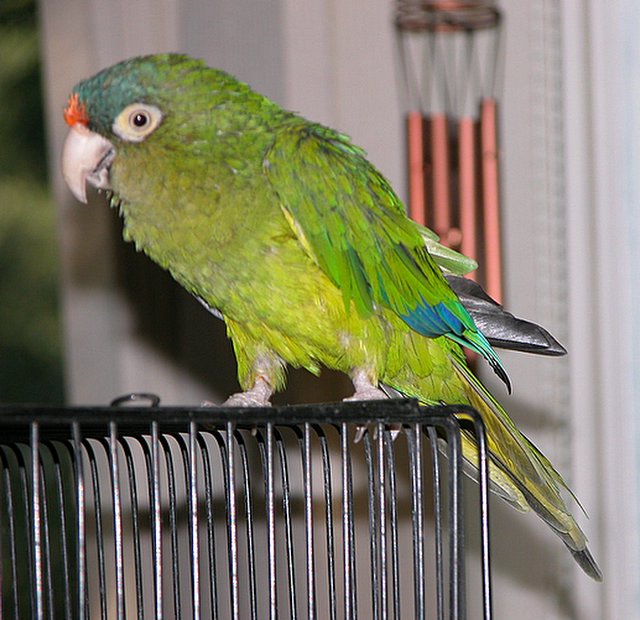
And, in homage to Pretty Bird, the starving African grey that has just been set free in Pretty Birds since there is no bird seed to be found in the battleground of Sarajevo, the three wasteful birds of our household, who keep the squirrels and doves outside fat and happy:

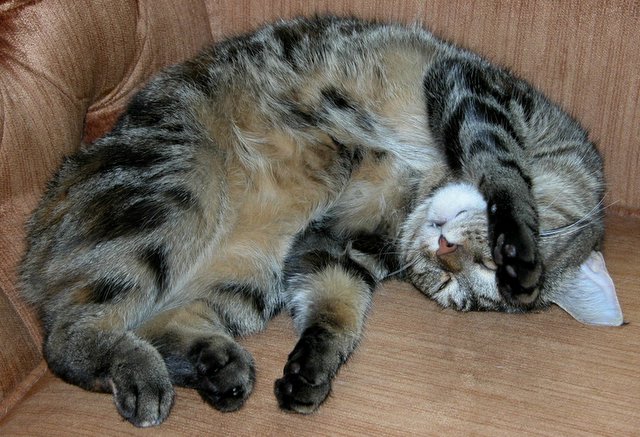
Leo
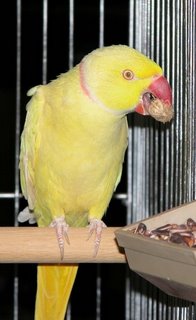
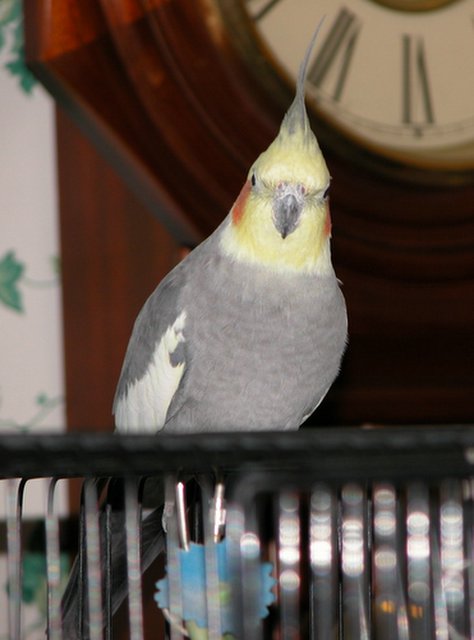
Trevor
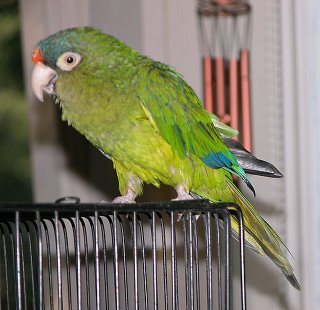
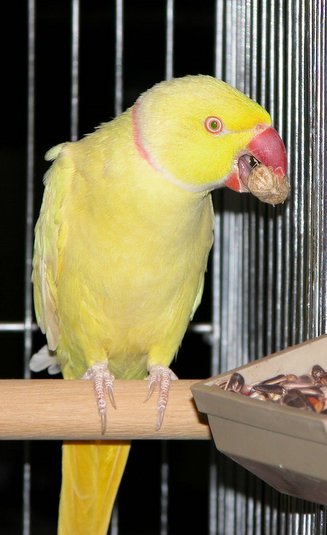
Ezra