It's hard to imagine that anyone who wants to read Kazuo Ishiguro's Never Let Me Go hasn't already learned through the various reviews what the book is really about, but if you haven't and you want to remain unspoiled, you might want to skip over the next four paragraphs.
Near the end there's a conversation that put me in mind of what little I've read of Temple Grandin, of how she's worked to reform the treatment of cattle in the meat industry, of how she's sought to bring peace and calm to livestock in their final moments of life through her design of holding chutes in the slaughterhouses. I couldn't help thinking that the clones in Ishiguro's novel have lived lives that have brought them the same type of calm acceptance toward their prescribed fates when the reader wants them to do nothing but rail against it, to bolt and blend in with the humans somewhere else.
Someone's put forth the supposition in the on-going discussion at Readerville that Ishiguro has actually written an animal rights book; the clones are merely a means of humanizing animals that we routinely oppress to suit our own purposes. This type of reading makes quite a bit of sense to me since otherwise the characters' passivity toward their fates on top of the fact that it must be a lot more economical to clone organs for harvesting rather than entire people makes the book feel less clever than we all know Ishiguro to be.
Kathy provides a maddening perspective to tell the story through; she's limited in what she knows, so therefore unreliable as a narrator; she's obsessive over minor details and vague on the big picture, leaving Ishiguro no other choice but to provide an "explains all" scene towards the end.
So. Maybe a cross between Margaret Atwood's The Handmaid's Tale and Michel Faber's Under the Skin?
____________
"The man cited a passage from the Talmud, from Brachot. He told the mourners that according to the Talmud, a man who has lost his mind is like the broken tablets that Moses shattered, which were gathered up and carried in the Ark of the Covenant along with the new pair. The broken tablets are also precious, the man said, though we do not know what role they were meant to play."
Unfortunately, I know exactly what role the man who lost his mind is supposed to play in Joy Comes in the Morning. Rosen uses Neal to bring a cheap thrilleresque edge to the wedding plans he's been working toward. Not only does Lev's schizophrenic friend see fit to kill his mother with a hammer, but he frightens Lev's parents before ever-so-brave rabbi-finance Deborah lets him into her apartment, then, after locking herself safely away from Neal in the bedroom, determines to go back into the living room where he is after being told by Lev over the phone that Neal had attacked his mother.
Of course, ever-so-brave but prone-to-tears Deborah is saved by another pet peeve of mine: character goes out the window. He plunges headfirst, last words we're told he thought being Water! Water! because that will make an ever-so-lovely parallel with Deborah's own plunge (and yes, plunge is the word used in both places) into the mikvah pool three chapters later on. What a lark! What a plunge!
Ugh.
And all those tears that had bugged me throughout? That I thought someone should have warned Rosen about? Twice within five pages near the end he defensively quotes Psalms: "Those who sow in tears will reap in joy." Just in case we didn't understand the title already from the first psalm he quoted, you know.
So, personal pet peeves encountered in this book:
Shifting Perspective (a sign of laziness on the writer's part in contemporary fiction in most cases I've seen)
Characters Who Cry Too Much (only acceptable in country music)
Mentally ill character killed off after killing off another minor character in a horrible fashion so main characters can be brave and sad but resolute while the readers can be expected not to really care because mentally ill character had gone bad and scary on top of being mentally ill. (cheap trick)
Suicide by jumping out the window (unless you're V. Woolf or Michael Cunningham riffing off V. Woolf. I sure hope Ian McEwan doesn't do this in Saturday.)
__________
New from the library:
Jeannette Walls' The Glass Castle
Temple Grandin's Animals in Translation
Thursday, May 05, 2005


Wednesday, May 04, 2005
The scattered books on my side of the bed,
Torn covers, broken backs, and the hacked limbs—
A fortress in defeat, or under siege,
At best a losing battle.
from Kenneth Fields' "Separate Camp," Classic Rough News
Complete poem available here.
Torn covers, broken backs, and the hacked limbs—
A fortress in defeat, or under siege,
At best a losing battle.
from Kenneth Fields' "Separate Camp," Classic Rough News
Complete poem available here.
Emerson
Carlos Baker, a professor at Princeton and biographer of Ernest Hemingway, died of cancer in 1987, prior to completing the final touches--an introduction discussing Emerson's philosophy of friendship and an epilogue supposed by its title "Exeunt Omnes" to inform the reader of the lives of Emerson's surviving friends following his own death. (Emerson had Alzheimer's--I know that from reading David Shenk's The Forgetting back in 2001.)
This lack of the intended beginning is surely behind the truncation of Emerson's early years; by page two of chapter one Waldo and his brothers are grown and educated, dealing with the threat of tuberculosis and mental illness, and we've been told that Waldo's wife Ellen will die of TB in 1831 (Waldo visits his wife's tomb and opens her coffin on page 11). A Unitarian minister, Emerson has a crisis of faith over the Eucharist: "I think Jesus did not mean to institute a perpetual celebration." By the end of the chapter it is Chistmas Day 1832, Emerson is 29 and sailing out of Boston harbor on his way to Malta.
A timeline of Emerson's life, including the early years, is available here. Also included: an overview of Emerson's philosophy and a bibliography.
Ralph Waldo Emerson quotations page: "All our progress is an unfolding, like a vegetable bud. You have first an instinct, then an opinion, then a knowledge as a plant has root, bud, and fruit. Trust the instinct to the end, though you can render no reason."
Essays and concordance, info on transcendentalism, from Donna Campbell at Gorganza University.
This lack of the intended beginning is surely behind the truncation of Emerson's early years; by page two of chapter one Waldo and his brothers are grown and educated, dealing with the threat of tuberculosis and mental illness, and we've been told that Waldo's wife Ellen will die of TB in 1831 (Waldo visits his wife's tomb and opens her coffin on page 11). A Unitarian minister, Emerson has a crisis of faith over the Eucharist: "I think Jesus did not mean to institute a perpetual celebration." By the end of the chapter it is Chistmas Day 1832, Emerson is 29 and sailing out of Boston harbor on his way to Malta.
A timeline of Emerson's life, including the early years, is available here. Also included: an overview of Emerson's philosophy and a bibliography.
Ralph Waldo Emerson quotations page: "All our progress is an unfolding, like a vegetable bud. You have first an instinct, then an opinion, then a knowledge as a plant has root, bud, and fruit. Trust the instinct to the end, though you can render no reason."
Essays and concordance, info on transcendentalism, from Donna Campbell at Gorganza University.
Tuesday, May 03, 2005
Carlos Baker's intentions for Emerson Among the Eccentrics:
"To write what will amount to a new biography of Emerson, developed by reference to some of his leading friendships, chiefly but not exclusively literary. These will include Alcott, Edward Thompson Taylor, Jones Very, Margaret Fuller, Thoreau, Hawthorne, Theodore Parker, Walt Whitman, Mary Moody Emerson, Charles Newcomb and Ellery Channing. Through [Emerson's] connections with these, it should be possible to watch the unfolding of his religious, literary, and politcal ideas, his changing views of nature, man and God; to show how his friends reflected, contradicted, partly diverged from, or zealously misrepresented his philosophical and ethical teachings; to use their views to throw light on his, and his to throw light on them in a program of spiritual ecology, complicated by the fact that he both half-created the climate of opinion by which he was nurtured, while partly adapting his opinions to the ideological environment which local and national events thrust upon him."
"To write what will amount to a new biography of Emerson, developed by reference to some of his leading friendships, chiefly but not exclusively literary. These will include Alcott, Edward Thompson Taylor, Jones Very, Margaret Fuller, Thoreau, Hawthorne, Theodore Parker, Walt Whitman, Mary Moody Emerson, Charles Newcomb and Ellery Channing. Through [Emerson's] connections with these, it should be possible to watch the unfolding of his religious, literary, and politcal ideas, his changing views of nature, man and God; to show how his friends reflected, contradicted, partly diverged from, or zealously misrepresented his philosophical and ethical teachings; to use their views to throw light on his, and his to throw light on them in a program of spiritual ecology, complicated by the fact that he both half-created the climate of opinion by which he was nurtured, while partly adapting his opinions to the ideological environment which local and national events thrust upon him."
Monday, May 02, 2005
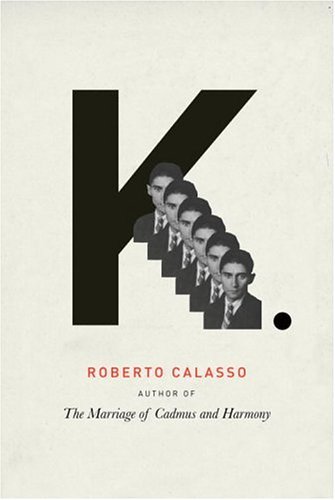
Roberto Calasso published a book about Kafka back in January and it's only now being reviewed in the New York Times. Anyone read this one?
Why does my cowboy hat come from Australia?
Who'd a thunk there'd be sunshine at MerleFest? What happened to the thunderstorms and chill (not to mention proms and bocce tournaments) that have kept us from attending for many years? What I mean to say is we did not bring suntan lotion as we would have for any other outdoor event and even the purchase of Australian cowboy hats did not save us from a bad case of sunburn. Ah well, at least I now have the requisite hat for Utah.
We saw (on the video screen, since we were a good quarter of a mile back from the stage): Alison Krauss and Union Station, the Chieftains, Bela Fleck, Buddy Miller, Jim Lauderdale, Allison Moorer, Steve Earle, Tim O'Brien, Jerry Douglas. We also saw an African raven. A. said Loretta Lynn had a bad case of allergies on Friday night and her sound system went out twice, so I don't have any angst about the family night out to dinner and to see "Hitchhikers Guide" instead.
Recent acquistions:
Jacob A. Riis' How the Other Half Lives (A. gave me her duplicate copy)
Mark Twain's Pudd'nhead Wilson
John Alexander Williams' Appalachia: A History
Also, A. loaned the two latest Christopher Buckley novels to L.
We saw (on the video screen, since we were a good quarter of a mile back from the stage): Alison Krauss and Union Station, the Chieftains, Bela Fleck, Buddy Miller, Jim Lauderdale, Allison Moorer, Steve Earle, Tim O'Brien, Jerry Douglas. We also saw an African raven. A. said Loretta Lynn had a bad case of allergies on Friday night and her sound system went out twice, so I don't have any angst about the family night out to dinner and to see "Hitchhikers Guide" instead.
Recent acquistions:
Jacob A. Riis' How the Other Half Lives (A. gave me her duplicate copy)
Mark Twain's Pudd'nhead Wilson
John Alexander Williams' Appalachia: A History
Also, A. loaned the two latest Christopher Buckley novels to L.
Sunday, May 01, 2005
Subscribe to:
Posts (Atom)
-
Last night I read Julian Barnes' The Sense of an Ending . Yes, the night before it went up against Donald Ray Pollock's The Devil Al...
-
As I said on New Year's Day, one of my projects for the year is to keep track of all the reading done by the characters in the fiction t...
-
 Anthony Trollope's 200th birthday takes place on April 24, and Karen at Books and Chocolate is hosting an Anthony Trollope Bicenntenni...
